Mechanical exclusion serves as the premier defense against invasive animals because it eliminates the entry pathways that chemical repellents and standard baiting programs leave open. In historic tree-canopied…
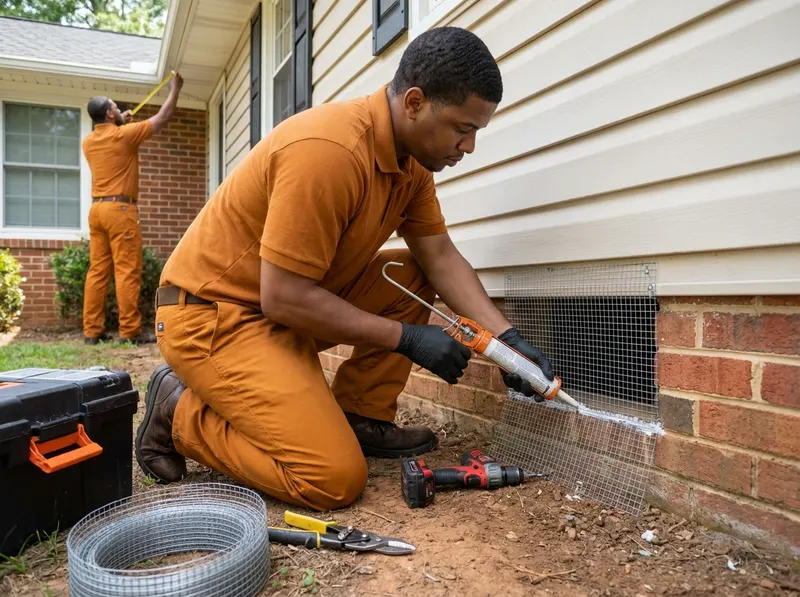
Mechanical exclusion serves as the premier defense against invasive animals because it eliminates the entry pathways that chemical repellents and standard baiting programs leave open. In historic tree-canopied neighborhoods like Myers Park, Dilworth, and Elizabeth, mature oak limbs provide direct roofline transit for gray squirrels and roof rats. These pests gnaw through softened fascia boards, unmeshed soffit vents, and attic dormer corners, creating scratching noises in ceilings and damaging electrical wiring. Rather than relying on repetitive indoor poison applications that risk leaving decomposing rodents inside wall voids, exclusion physically blocks entry using durable materials like 1/4-inch galvanized hardware cloth, custom sheet-metal flashing, and elastomeric structural sealants that rodents cannot chew through.
Modern crawl space foundations and high-density builds in Plaza Midwood, South End, and NoDa present distinct ground-level vulnerabilities. Settling foundations, unsealed plumbing penetrations, and loose crawl space doors allow Norway rats and mice to migrate from urban drainage corridors directly beneath floorboards. In newer developments across Ballantyne, Cotswold, and University City, builder-gap openings behind gutter lines and uncapped ridge vents offer uninhibited access to warm attic insulation during winter cold snaps. Installing custom-fitted steel hardware and sealing utility conduit penetrations stops pests before they reach living quarters, safeguarding indoor air quality without requiring locked-in chemical service contracts.
Choosing permanent exclusion represents a durable investment in structural integrity over transient temporary fixes. Trapping alone merely removes current occupants while leaving your structure vulnerable to replacement colonies traveling along nearby greenways like Little Sugar Creek. The trade-off involves an upfront investment in physical carpentry and hardware installation, yet it permanently shields HVAC ductwork, attic insulation, and family living spaces from bio-contaminants, providing reliable domestic protection without ongoing chemical exposure.
Every job gets a firm, written price after a free on-site visit.
Tell us about your rodent & small wildlife mechanical exclusion job in Charlotte and we'll send a clear, written quote — usually the same day.
 Pest Free Living Services